Disposable e-cigarette with variety of flavorsCategoriesIndustry News

What is e-cigarette liquid

Everything, what you need to know about e-liquids simply explained!

No matter, ob du gerade erst mit dem Dampfen anfängst oder schon länger dabei bist: The E-Liquid ist das Herzstück deines Erlebnisses. Ohne Saft kein Dampf! Aber was steckt eigentlich in dieser kleinen Flasche? Ist das sicher? Und wie holst du das Beste aus deinem Liquid heraus? Wir klären auf – ganz ohne kompliziertes Labor-Deutsch.

1. Was ist E-Liquid eigentlich?

Stell dir deine E-Zigarette wie einen kleinen Wasserkocher vor. Das E-Liquid ist die Flüssigkeit darin. Wenn du ziehst, wird sie erhitzt und verwandelt sich in feinen Dampf, den du einatmest. So einfach ist das!

2. Die Zutaten: Was dampfst du da eigentlich?

no worries, du musst kein Chemiker sein, um das zu verstehen. Fast jedes Liquid besteht aus nur vier Dingen:

  • VG (Vegetable glycerin): Macht den Dampf schön dick und weiß. Es ist sanft im Hals.
  • PG (Propylene glycol): Trägt den Geschmack und sorgt für den „Kick“ im Hals (ähnlich wie bei einer echten Zigarette).
  • Flavors: Diese sorgen dafür, dass dein Dampf nach Erdbeere, Minze oder Tabak schmeckt.
  • Nicotine: Kannst du selbst wählen – von „ordentlich Power“ bis hin zu „komplett nikotinfrei“.

Wusstest du schon? VG und PG klingen zwar nach Chemie, stecken aber auch in Zahnpasta, Hautcremes oder sogar in Lebensmitteln wie Kuchen und Kaugummi.

3. Quality: So wird dein Liquid gemacht

Ein gutes Liquid entsteht nicht in der heimischen Küche, sondern unter strengen Regeln:

  • Sauberkeit geht vor: In der Fabrik tragen alle Haarnetze und Masken. Staub hat im Liquid nichts zu suchen!
  • Der Sicherheits-Check: Bevor eine Flasche in den Verkauf geht, wird sie geprüft. Sind Schadstoffe drin? Bakterien? Nur was 100 % rein ist, darf in den Shop.
  • Der „Ausweis“ für die Flasche: Jede Flasche hat eine Nummer (Chargennummer). So kann man genau nachverfolgen, wann und von wem sie gemischt wurde.

4. Profi-Tricks: So sparst du Liquid (und Geld!)

Niemand verschwendet gerne sein Lieblings-Liquid. Hier sind zwei einfache Tipps, wie deine Flasche länger hält:

  • Nikotin schlau wählen: Wenn du ein Liquid mit etwas mehr Nikotin nimmst, bist du schneller „satt“ und ziehst seltener an der Dampfe. Das schont den Vorrat.
  • Das richtige Gerät: Riesige Wolkenmacher-Geräte verbrauchen extrem viel Saft. Wenn du sparen willst, nimm lieber ein kleines Pod-System. Die sind dezent und verbrauchen deutlich weniger.
  • Dunkel lagern: E-Liquids mögen keine pralle Sonne. Stell sie lieber ins Regal oder in die Schublade, damit der Geschmack frisch bleibt.

5. Welches Liquid ist das richtige für mich?

Wenn du gerade erst umsteigst, probier es mal mit einem 50/50 Mischverhältnis (PG/VG). Das funktioniert in fast jedem Gerät super und schmeckt klasse.

Application of a premium vapeCategoriesIndustry News

Accidental smoking cessation: Can e-cigarettes help you “accidentally” quit?

Find out everything about the phenomenon of “accidental quitting”. Studies from the Roswell Park Cancer Center show, dass viele Raucher durch E-Zigaretten unbeabsichtigt mit dem Rauchen aufhören. Wir analysieren die wissenschaftlichen Hintergründe, die Rolle des Dual-Use und die gesundheitlichen Vorteile der Schadensminimierung.


Was ist eine „unbeabsichtigte Raucherentwöhnung“?

In der Welt der Tabakprävention taucht ein neues Phänomen auf: the „versehentliche Ausstieg“ (Accidental Quitting). Er beschreibt Raucher, die ursprünglich gar nicht die Absicht hatten, to give up smoking, aber durch den Gebrauch von E-Zigaretten (Vaping) schlussendlich doch vollständig auf Tabak verzichten.

Im Gegensatz zu klassischen Methoden, die eine hohe mentale Entschlossenheit erfordern, geschieht dieser Prozess bei der E-Zigarette oft schrittweise und unbewusst durch Verhaltensänderung.


Wissenschaftliche Belege: Die Roswell Park Studie

Eine bahnbrechende Peer-Review-Studie von Forschern des Roswell Park Comprehensive Cancer Center liefert beeindruckende Zahlen. Die Forscher begleiteten 1.600 persons, die zu Beginn der Studie keine Absicht hatten, to stop smoking.

Ergebnisse der 12-Monats-Studie:

Gruppe (Raucher ohne Aufhörwillen)Erfolgreiche Tabak-Abstinenz nach 12 monthsErfolgschance
Tägliche E-Zigaretten-Nutzer28 %4,6-mal höher
Nicht-Dampfer6 %Referenzwert

Das Fazit der Wissenschaft: Smoker, who use vaping products daily, haben eine viermal höhere Wahrscheinlichkeit, mit dem Rauchen aufzuhören – selbst wenn dies gar nicht ihr ursprüngliches Ziel war.


Warum führt Dampfen zum „versehentlichen“ Erfolg?

Es gibt drei Hauptgründe, warum der Übergang oft so reibungslos funktioniert:

  1. Situative Substitution: Viele greifen zur E-Zigarette an Orten, on which smoking is prohibited (z. B. im Auto oder im Büro). Dies durchbricht die strikte Routine der Tabakzigarette.
  2. Sensorische Ähnlichkeit: Die E-Zigarette befriedigt die „Hand-zu-Mund“-Gewohnheit, die bei Nikotinpflastern oder Kaugummis fehlt.
  3. Variety of flavors: Sobald sich der Geschmackssinn erholt, empfinden viele Nutzer den verbrannten Tabakgeschmack als unangenehm und bevorzugen die Aromen der E-Zigarette.

Die Phase des „Dual-Use“: Chance oder Risiko?

Von Dual-Use spricht man, wenn eine Person sowohl dampft als auch raucht. Dies ist oft die Übergangsphase bei einem unbeabsichtigten Ausstieg.

Wichtige Fakten für Ihre Gesundheit:

  • Risikominimierung: Jede nicht gerauchte Zigarette reduziert die Aufnahme von Teer und Kohlenmonoxid. Studies show, dass Dual-User oft eine Verbesserung ihrer Atemwege bemerken.
  • Das Endziel: Um das Krankheitsrisiko (z. B. Krebs oder Herz-Kreislauf-Erkrankungen) signifikant zu senken, is the vollständige Verzicht auf Tabakzigaretten unerlässlich. Die E-Zigarette sollte als Brücke zur Rauchfreiheit dienen.

Experten-Tipps für den erfolgreichen Umstieg

Auch wenn der Ausstieg „versehentlich“ passieren kann, erhöhen diese Schritte die Erfolgsquote:

  • Wahl des richtigen Geräts: Ein einfach zu bedienendes Pod-System ist oft effektiver als komplizierte Akkuträger.
  • Nikotinstärke anpassen: Die Nikotinkonzentration sollte hoch genug sein, um Entzugserscheinungen zu vermeiden, damit der Rückfall zur Zigarette ausbleibt.
  • Medizinische Beratung: Sprechen Sie mit Ihrem Arzt oder Apotheker über Strategien zur Schadensminimierung (Tobacco Harm Reduction).

Frequently asked questions (FAQ)

Ist Dampfen gesünder als Rauchen?

Laut Gesundheitsbehörden wie Public Health England ist Dampfen etwa 95 % weniger schädlich als Rauchen, da keine Verbrennung stattfindet und somit die meisten krebserregenden Stoffe entfallen.

Hilft die E-Zigarette wirklich bei der Entwöhnung?

And, klinische Studien zeigen, dass E-Zigaretten oft effektiver sind als herkömmliche Nikotinersatztherapien, da sie sowohl die physische als auch die psychische Abhängigkeit adressieren.

Pod Mod Vape with strong performanceCategoriesIndustry News

Ways to achieve high vapor production

I often experience this in industrial practice, that boiler systems are pushed to their limits, to achieve production goals. But one high steam production is rarely a question of boiler size, but of intelligent operational management.

Whoever eliminates the hidden energy losses in the system, basically receives “free” Additional steam. Here are the 5 most effective adjustment screws from practice - explained clearly and without complex theory.

Optimization potential for efficient and high steam production

1. The combustion: Find the right size

Think of the burner like a carburetor: The ratio of air to fuel must be exactly right.

  • Too little air: The fuel does not burn completely. Soot is created, which is deposited on the pipes and massively blocks heat transfer.
  • Too much air: This is the more common mistake. The excess air is unnecessarily heated in the boiler and blows valuable energy out the chimney.

The solution: Install an automatic one O2 control. This “breathes” with the boiler and always keeps the excess air at an optimal level, minimal area. This ensures a hotter flame and more steam output per cubic meter of gas.

2. Use exhaust heat (Economiser)

In many older systems, the exhaust gas escapes into the atmosphere at over 200°C or 250°C. This is a complete waste of energy.

A Economiser is a heat exchanger, which sits in the exhaust gas stream. He uses these “waste heat”, to preheat the cold feed water, before it flows into the boiler.

The rule of thumb for practitioners: If you change the feed water temperature by exhaust heat 6Increase °C, save 1% fuel. Or the other way around: They produce with the same fuel 1% more steam.

3. Fight the Kettlestone (Water treatment)

Water quality is the most critical factor for stable steam production. Hard water leads to scale deposits (Scale) in the heating surfaces.

Scale acts as a strong insulating layer. The heat from the burner no longer reaches the water efficiently. The consequences are fatal:

  1. Steam production drops noticeably.
  2. Fuel consumption increases dramatically.
  3. The material of the flame tubes can overheat and crack.

A modern monitoring system for water hardness and automated desalination often pays off after just a few months.

4. Hot condensate is better than cold fresh water

Every liter of condensate, that comes back from production, is “Worth its weight in gold”. Why? Because this water is already hot and chemically pure.

If you have cold fresh water (z.B. 10°C) to use, the boiler has to use enormous energy, just to bring it to boiling temperature. Condensate often comes back at 80°C or 90°C. This energy difference is immediately available to you additional evaporation performance available.

Praxis-Check: Check your condensate lines. Condensate is often simply led into the duct, because return pumps are defective or lines are missing.

5. Stop steam losses (Steam trap)

Steam trap (Steam Traps) should let water through, but retain steam. If they are defective (“blow through”), the freshly produced steam escapes unused into the condensate system.

In a facility with 100 Steam traps are statistically common 10 bis 15 defect. That's the equivalent of a giant hole in your steam line. Through regular maintenance (z.B. with ultrasound devices) close these holes and instantly increase the available steam pressure for your machines.


More steam through less waste

You often don't need to buy a new boiler, to get more steam. The optimization of combustion, Heat recovery and condensate management are often used 10% bis 20% more power free.

Would you like to check the potential of your system?? We support you in taking stock and uncovering sources of loss.

Premium-Vapes mit Mesh-Coil TechnologieCategoriesTechnical information

How to fill an e-cigarette tank

Myvapesite: Your bestE-cigarette shop

Filling or refilling your vape tank is an important part of your vape experience. If you are a new user, this may seem daunting.

However, in reality, filling your vape tank is a simple process, which should be as user-friendly and effortless as possible. Although there are some differences between each brand and type of tank, The process for filling an e-cigarette tank is largely the same.

Our guide is intended as a general reference and covers the two most common types of tanks – Top-fill e-cigarette tanks and bottom-fill e-cigarette tanks. Although this guide is not exhaustive, but gives you a sufficient overview of the general process. If you have questions about a specific tank, Of course you are welcome to contact us! With that being said, let’s dive in.

Independently of, Which filling method you use for your tank, there is a common first step: You must first unscrew the rest of the vape kit from the vape. (Mind you: If you have just purchased a replacement tank yourself, You can of course ignore this step!)

Time needed: 5 days

How to fill an e-cigarette tank from the top?

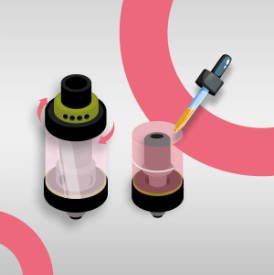
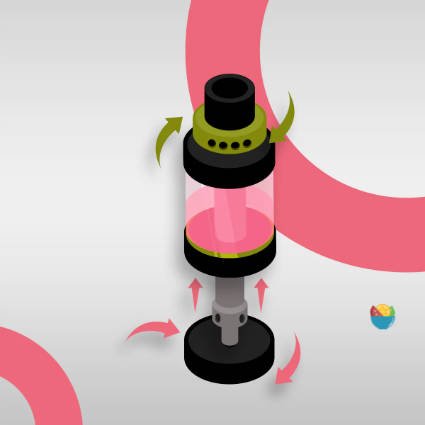
  1. Step 1

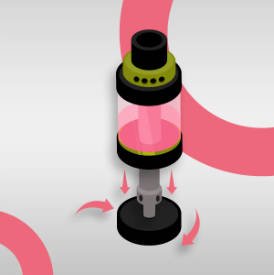
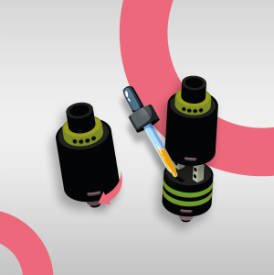
    Unscrew the airflow base at the bottom of the tank and carefully pull the e-cigarette coils out of the tank.
    How to fill an e-cigarette tank01 1

  2. Step 2.


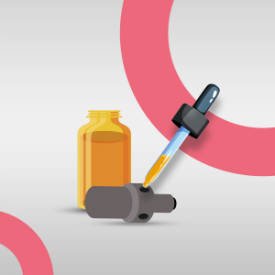
    Add a few drops of e-liquid to the coil of your e-cigarette. Gently soaking the coil will help extend its lifespan. Then insert the coil back into the tank.
    How to Fill an E-Cigarette Tank02 1

  3. Step 3.


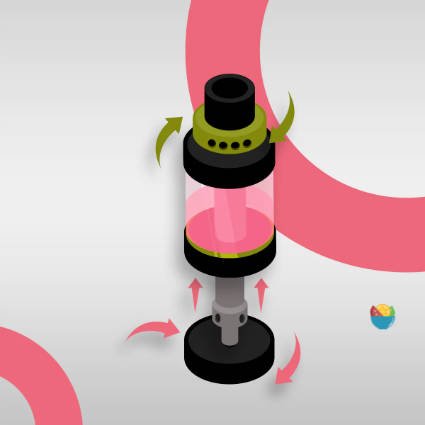
    Unscrew the top connector from the tank, and you should be able to see an access hole for dripping the fluid.
    Fill the tank with liquid, until you reach the point, which indicates, that the tank is full. (Be careful at this stage, that no liquid gets into the middle pipe of the tank, as this is the passage for the steam).
    How to fill an e-cigarette tank03 1

  4. Step 4.


    Once the tank is filled, tighten the top connection again, reinsert the coil and then retighten the bottom connector
    How to fill an e-cigarette tank04 2

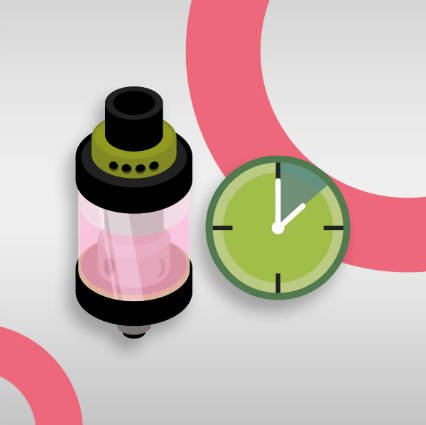
  5. Step 5.


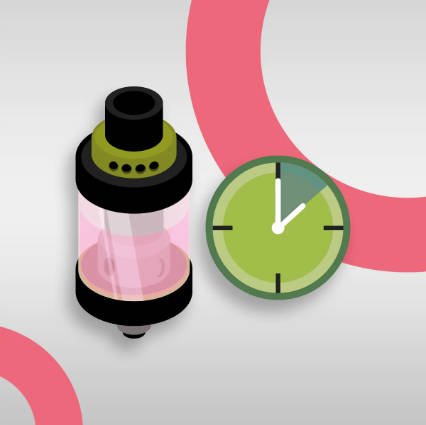
    Wait 2-3 minutes, until the coil has filled with e-liquid. Your tank is then ready for use.
    How to fill an e-cigarette tank05 2

How to Fill the Bottom Fill Vape Tank

Wie man einen E-Zigaretten-Tank füllt01 1

Step 1.

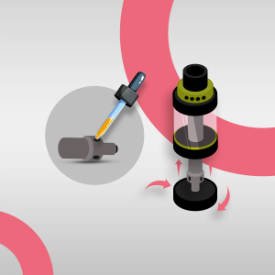
Unscrew the bottom connector from the tank and carefully pull out the e-cigarette coils.

Wie man einen E-Zigaretten-Tank füllt12

Step 2.

Add a few drops of e-liquid to the coil. Gently dipping the coil into the e-liquid helps achieve this, to extend their lifespan. Then insert the coil back into the tank.

Wie man einen E-Zigaretten-Tank füllt13

Step 3.

Unscrew the bottom metal connector, to gain access to the tank chamber.

Insert the tip of your e-liquid bottle into the chamber and allow the e-liquid to flow out to the full tank mark.

(Be sure to, Do not spill liquid into the middle pipe of the tank, as this is the airway for inhaling the vapor).

Wie man einen E-Zigaretten-Tank füllt04 1

Step 4.

Reassemble the water tank and tighten all connectors.

Wie man einen E-Zigaretten-Tank füllt05 1

Step 5.

Allow the coils to saturate for a few minutes. Your tank is then ready for use.

Summary

As you can see, refilling the tank is no problem. This process, which is an essential part of your daily e-cigarette, was professionally developed, to be as smooth and easy as possible.

If you are new and want to learn more about tanks in general, read more in our blog. You'll find all the basics in there, that you need to get started, z. B. Descriptions of the different types of tanks and how to keep them clean.

vape 2000 TrainsCategoriesTechnical information

Should I use a high resistance or a low resistance coil?

Should I use a high resistance or a low resistance coil? Der ultimative Guide

Die Wahl des richtigen Widerstands (Ohm-Wert) ist entscheidend für Ihr Dampferlebnis. Der Widerstand Ihrer Spule (Coil) bestimmt nicht nur die Menge des Dampfes, sondern auch die Intensität des Geschmacks und die Akkulaufzeit. In diesem Artikel erklären wir die Unterschiede zwischen hochohmigen und niederohmigen Coils, damit Sie die richtige Wahl für Ihr Setup treffen können.

Grundlagen: Was bedeutet der Widerstand (Ohm) beim Dampfen?

In der Welt der E-Zigaretten gibt der Ohm-Wert an, wie viel elektrischer Widerstand dem Stromfluss entgegengesetzt wird. Nach dem Ohmschen Gesetz gilt: Je niedriger der Widerstand bei gleichbleibender Spannung, desto mehr Strom fließt und desto mehr Leistung (Watt) wird erzeugt.

Was sind hochohmige Spulen (MTL)?

Spulen mit einem Widerstand von über 1,0 Ohm werden als hochohmig bezeichnet. Diese sind ideal für das Cheek steaming (Mouth-to-Lung – MTL), das dem Zug an einer herkömmlichen Zigarette sehr ähnlich ist.

Was sind niederohmige Spulen (Sub-Ohm)?

Werte unter 1,0 Ohm bezeichnet man als niederohmig oder Sub-Ohm. Diese Coils sind für das direkte Lungendampfen (Direct-to-Lung – DL) designed, bei dem riesige Dampfwolken entstehen.


Der Vergleich: Hochohmig vs. Niederohmig

CharacteristicHochohmig (> 1.0 Ohm)Niederohmig (< 1.0 Ohm)
Train technologyMTL (wie Zigarette)DL (direkt in die Lunge)
Amount of steamDiskret / Small amountVery high (Cloud Chasing)
The tasteKlar und intensivWarm und voluminös
Liquid consumptionSparsamVery high
Battery lifeLong termSchneller leer
Nicotine strengthHigher (z.B. 12mg)Lower (z.B. 3mg)

Wann sollten Sie eine hochohmige Spule verwenden?

Hochohmige Coils sind die perfekte Wahl für Einsteiger und Liebhaber von diskretem Dampfen.

  1. Tabak-Entwöhnung: Da der Zugwiderstand fester ist, simuliert er das Gefühl einer echten Zigarette perfekt.
  2. Nicotine salts: Hochohmige Coils eignen sich hervorragend für Liquids mit hohem Nikotingehalt oder Nikotinsalze, da weniger Liquid pro Zug verdampft wird.
  3. Alltagstauglichkeit: Ihr Akku hält deutlich länger, und Sie müssen weniger oft Liquid nachfüllen.

Wann ist eine niederohmige Spule (Sub-Ohm) besser?

Sub-Ohm-Dampfen ist eine Lifestyle-Entscheidung für erfahrene Nutzer.

  1. Cloud Chasing: Wenn Sie maximale Dampfentwicklung suchen, ist Sub-Ohm alternativlos.
  2. Warmer Dampf: Durch die höhere Wattzahl ist der Dampf wärmer, was viele Nutzer bei Dessert-Aromen bevorzugen.
  3. Intensives Aroma: Die große Oberfläche der Sub-Ohm-Coils (oft Mesh-Coils) setzt in kurzer Zeit sehr viel Aroma frei.

Safety notice: Akkusicherheit bei niedrigen Widerständen

Beim Sub-Ohm-Dampfen werden hohe Ströme aus dem Akku gezogen. Es ist essenziell, that you hochwertige Hochleistungszellen use, die für diese Entladeströme zertifiziert sind. Nutzen Sie nach Möglichkeit geregelte Akkuträger, die über Schutzschaltungen gegen Kurzschlüsse und Überhitzung verfügen.


Conclusion: Welche Spule ist die richtige für mich?

Die Antwort hängt von Ihren persönlichen Zielen ab:

  • Wollen Sie mit dem Rauchen aufhören und suchen ein diskretes Gerät? Choose hochohmige Spulen (1,2 Ohm oder 1,6 Ohm).
  • Suchen Sie maximalen Spaß, große Wolken und intensives Direct-Lung-Dampfen? Dann greifen Sie zu Sub-Ohm-Spulen (0,2 Ohm bis 0,6 Ohm).

vape 10000 TrainsCategoriesTechnical information

Opinions about e-cigarettes

Opinions about e-cigarettes: Zwischen wissenschaftlicher Skepsis und praktischer Schadensminimierung

Die Debatte um die E-Zigarette ist so hitzig wie kaum ein anderes Gesundheitsthema. Während die einen in ihr das rettende Ufer für langjährige Tabakkonsumenten sehen, warnen Mediziner vor unbekannten Langzeitfolgen. In diesem umfassenden Dossier analysieren wir die aktuellen Expertenmeinungen, wissenschaftlichen Fakten und gesellschaftlichen Ansichten zum Thema Dampfen im Jahr 2026.

Die medizinische Fachmeinung: Was sagen Lungenärzte?

In der medizinischen Gemeinschaft herrscht ein vorsichtiger Konsens. Experten der Pneumologie betonen immer wieder, dass E-Zigaretten keinLifestyle-Produktfür Nichtraucher sein dürfen.

Das Risiko der Inhaltsstoffe

Die Meinungen über die Inhaltsstoffe der Liquids – meist Propylenglykol, Glycerin und Aromen – sind geteilt. Während die kurzfristige Toxizität deutlich geringer ist als bei Tabakrauch, bleibt die Sorge vor demAroma-Cocktail”. Viele Toxikologen warnen, dass das Erhitzen bestimmter Aromastoffe chemische Verbindungen freisetzen kann, deren Auswirkungen auf das Lungengewebe noch nicht abschließend erforscht sind.

E-Zigaretten in der Suchttherapie

Ein interessanter Wendepunkt in der Expertenmeinung ist die Rolle der E-Zigarette als Entwöhnungstool. Institutionen wie das britische Gesundheitssystem (NHS) vertreten die Meinung, dass E-Zigaretten eine effektive Hilfe beim Rauchstopp sein können, sofern sie Teil eines strukturierten Ausstiegsplans sind. Hier wird das Prinzip der “Harm Reduction” (Damage minimization) über die absolute Abstinenz gestellt.

Öffentliche Meinung vs. Wissenschaftliche Evidenz

Die Wahrnehmung in der Bevölkerung wird oft durch Schlagzeilen geprägt. Doch was sagen die Daten wirklich?

Mythos vs. Realität: Die Gateway-Theorie

Ein häufiger Kritikpunkt ist die sogenannte Gateway-Theorie – die Meinung, dass E-Zigaretten Jugendliche zum Tabakrauchen verleiten. Aktuelle Langzeitstudien zeigen jedoch ein differenziertes Bild: Während das Experimentieren unter Jugendlichen zunimmt, stagniert oder sinkt die Zahl der regelmäßigen Tabakraucher in vielen Ländern weiterhin. Die Meinung der Jugendschutzbeauftragten bleibt dennoch klar: Strenge Regulierungen und Abgabeverbote sind unerlässlich.

Die Meinung der Konsumenten: Lebensqualität im Fokus

Umfragen unter Umsteigern zeigen ein klares Bild. Viele berichten von:

  • Verbessertem Geruchs- und Geschmackssinn.
  • Weniger Kurzatmigkeit bei körperlicher Belastung.
  • Dem Wegfall des störenden Tabakgeruchs in der Kleidung. Diese positiven subjektiven Meinungen dürfen jedoch nicht über die Tatsache hinwegtäuschen, dass Nikotin weiterhin eine suchterzeugende Substanz ist.

Rechtliche Bewertung und staatliche Regulierung

Die Meinung des Gesetzgebers spiegelt sich in der Tabakproduktrichtlinie (TPD) wider. Hier geht es vor allem um Vertrauen und Sicherheit. Durch strenge Grenzwerte für Tankgrößen und Nikotinkonzentrationen versucht der Staat, die Risiken für den Verbraucher zu minimieren. Kritiker aus der Branche meinen oft, die Regulierung sei zu streng, während Verbraucherschützer eine noch klarere Kennzeichnung von Warnhinweisen fordern.

Safety and quality: Worauf Sie achten sollten

Wenn man die verschiedenen Meinungen zusammenführt, ergibt sich eine klare Empfehlung für den sicherheitsbewussten Nutzer:

  1. Qualität der Hardware: Vermeiden Sie Billigimporte ohne CE-Kennzeichnung. Die technische Sicherheit der Akkus ist entscheidend, um Unfälle zu vermeiden.
  2. Transparenz der Liquids: Vertrauen Sie nur Herstellern, die ihre Inhaltsstoffe offenlegen und in zertifizierten Laboren produzieren.
  3. No experiments: Die Meinung von Gesundheitsbehörden zuDIY-Liquidsoder dem Hinzufügen von Ölen ist eindeutig: Lebensgefahr! (Stichwort: EVALI).

Eine differenzierte Betrachtung ist notwendig

Die „eine“ Meinung zur E-Zigarette gibt es nicht. Vielmehr handelt es sich um eine Abwägung von Risiken. Für einen Nichtraucher ist die E-Zigarette ein unnötiges Gesundheitsrisiko. Für einen starken Raucher hingegen kann sie die lebensverändernde Chance sein, den giftigen Verbrennungsprodukten des Tabaks zu entkommen.

Das Ziel muss eine informierte Entscheidung auf Basis wissenschaftlicher Fakten sein, fernab von Lobbyismus und Panikmache.

vape 4000 TrainsCategoriesTechnical information

Electronic Cigarette Targets, to form a healthy habit

The path to a smoke-free life: E-cigarettes as a harm reduction tool

The decision, to stop smoking, is one of the most important steps for your long-term vitality. In recent years, the e-cigarette has established itself as a popular tool for quitting. But how do you use this technology sensibly?, without falling into a new dependency? In this guide, we do not view strategic transition as a “healthy habit.”, but as a sound method for minimizing damage (Harm Reduction).

Elektronische Zigarettenziele, um eine gesunde Gewohnheit zu bilden2 18

Why the switch?? The scientific perspective on e-cigarettes

Before formulating goals, you have to understand the “why”.. The key difference between tobacco cigarettes and e-cigarettes lies in the chemical process: Combustion versus vaporization.

Eliminate combustion products

When tobacco is burned, over 7.000 Chemicals, including tar, Carbon monoxide and carcinogenic substances. E-cigarettes, on the other hand, heat a liquid (Liquid) just so far, that an aerosol is created. According to analyzes by leading health organizations, vaping is significantly less harmful to existing smokers, as there is no toxic pollution from tar and combustion gases.

The principle of “harm reduction”

In terms of the E-E-A-T guidelines, transparency is crucial: Vaping is not “healthy” in the absolute sense. However, for a long-term smoker it represents a massive reduction in pollutant intake. The goal is it, to use the e-cigarette as a bridge, to enable the body to regenerate from the effects of tobacco.

A structured 3-step plan for your new habits

To create lasting change, a strategic approach is required. Success in quitting smoking is based on measurable milestones.

Level 1: Complete smoking cessation (100 % Switch)

The biggest mistake many users make is “dual use” – smoking and vaping at the same time.

  • The goal: Set a fixed date for the full change. From this day on, tobacco cigarettes should no longer be consumed, to immediately relieve the lungs.
  • Tipp: To start, choose a nicotine strength, that reliably satisfies your desire, to avoid falling back into old smoking patterns.

Level 2: The gradual reduction of nicotine

One of the biggest advantages of vaping is the precise control over the nicotine dose. Use this for gradual withdrawal:

  • Month 1-3: Stabilization phase with constant nicotine strength.
  • Month 4-8: Reduction to medium concentrations (z. B. von 12 mg/ml 6 mg/ml).
  • Months 9-12: The goal is to reach the lowest level (3 mg/ml) or switching to nicotine-free liquids.

Level 3: Quitting the vaping habit

Once the physical dependence on nicotine has been overcome, it applies, to break the psychological habit of “hand-to-mouth movement”.. The end goal of a responsible strategy is this, also to gradually reduce the use of e-cigarettes, until you can live completely abstinent.

Safety and quality: What you need to pay attention to when buying

The quality of the products used is crucial to the trustworthiness of your new routine. Safety comes first.

  • Certified liquids: Only use products, that of the European Tobacco Products Directive (TPD2) are equivalent to. These are subject to strict controls regarding purity and ingredients.
  • Transparency of ingredients: Pay attention to clear declarations of propylene glycol (PG), vegetable glycerin (VG) and food grade flavors.
  • Regular maintenance: A clean atomizer and fresh coils (Evaporator heads) are essential. They prevent the liquid from overheating, thereby avoiding harmful by-products.

The e-cigarette as a bridge, not as a final stop

A “healthy habit” in the context of smoking cessation means primary: To regain freedom from tobacco addiction. The e-cigarette should be viewed as a temporary tool. With discipline when reducing nicotine and a clear focus on quality, you create the best conditions for a vital, smoke-free life.

Vaping mods in comparisonCategoriesTechnical information

Very useful vaping tips for different weather

Vaping bei jedem Wetter: Der ultimative Guide für Sommer und Winter

Jeder Dampfer kennt das: Im Sommer läuft plötzlich der Tank aus, und im Winter macht der Akku schlapp, obwohl er frisch geladen war. E-Zigaretten sind empfindliche elektronische Geräte, und sowohl das E-Liquid als auch die Akkuzellen reagieren stark auf Temperaturschwankungen.

Damit Sie das ganze Jahr über den perfekten Dampf genießen können, haben wir die wichtigsten Tipps für heiße Sommertage und eiskalte Winternächte zusammengefasst.

Part 1: Vaping im Sommer (heat & Sonne)

Hohe Temperaturen sind der natürliche Feind der Viskosität (Zähflüssigkeit) Ihres Liquids. Hier ist, what you need to pay attention to.

1. Das Problem mit dem dünnflüssigen Liquid

Hitze macht Ihr E-Liquid extrem dünnflüssig – fast wie Wasser.

  • The consequence: Die Watte im Verdampferkopf kann das Liquid nicht mehr halten, und der Tank fängt an zusiffen” (auszulaufen).
  • The solution:
    • Dickeres Liquid nutzen: Steigen Sie im Hochsommer auf Liquids mit einem höheren VG-Anteil (Vegetable Glycerin) one. VG ist von Natur aus dicker und hält auch bei Hitze besser in der Watte.
    • Aufrecht lagern: Achten Sie penibel darauf, dass Ihre E-Zigarette steht und nicht liegt, besonders wenn das Liquid durch die Hitze dünn ist.

2. Akku-Sicherheit: Lebensgefahr im Auto!

Dies ist der wichtigste Sicherheitshinweis in diesem Artikel.

  • Die Gefahr: Lithium-Ionen-Akkus mögen keine Hitze. Ab 60°C können sie instabil werden. Ein Auto in der prallen Sonne kann sich schnell auf über 70°C aufheizen.
  • Die Regel: Lassen Sie Ihre E-Zigarette oder Ersatzakkus niemals im Auto liegen!
  • Tipp: Wenn Sie am Strand sind, bewahren Sie das Gerät im Schatten auf, idealerweise in einer Tasche und nicht im direkten Sonnenlicht.

3. Das Liquidreiftschneller

Wärme beschleunigt den Reifeprozess von E-Liquids. Nikotin kann oxidieren und dunkel werden, und der Geschmack kann sich verändern oder “chickens”. Lagern Sie Ihre Vorräte zu Hause immer an einem kühlen, dark place (z.B. im Schrank oder Keller), niemals auf der Fensterbank.


Part 2: Vaping im Winter (Kälte & Frost)

Kälte stellt Dampfer vor ganz andere Herausforderungen. Hier kämpfen Sie eher gegen die Physik der Chemie und die Mechanik.

1. Der Akku-Schwund

Bei niedrigen Temperaturen verlangsamen sich die chemischen Prozesse im Inneren des Akkus.

  • Das Symptom: Der Akku zeigt “full” an, bricht aber nach wenigen Zügen ein oder meldetLow Battery”. Die Kapazität sinkt drastisch.
  • The solution:
    • Körperwärme nutzen: Tragen Sie Ihre E-Zigarette in einer Innentasche Ihrer Jacke, nah am Körper. Die Körperwärme hält den Akku auf Betriebstemperatur.
    • Ersatzakkus: Wenn Sie länger draußen sind (z.B. auf dem Weihnachtsmarkt), nehmen Sie Ersatzakkus mit und halten Sie auch diese warm.
    • Nicht eiskalt laden: Laden Sie einen eiskalten Akku niemals sofort auf. Lassen Sie das Gerät erst langsam auf Zimmertemperatur kommen, um Schäden an der Zellchemie zu vermeiden.

2. Nachfluss-Probleme (Dry Hits)

Was im Sommer zu dünn ist, ist im Winter zu dick. Kälte macht VG (Glycerin) extrem zähflüssig, ähnlich wie Honig.

  • The problem: Das dicke Liquid fließt nicht schnell genug durch die kleinen Löcher in die Watte nach. Wenn Sie dann ziehen, verbrennt die trockene Watte – der gefürchtete “Dry Hit”.
  • The solution:
    • High PG: Wenn Sie viel draußen dampfen, nutzen Sie Liquids mit mehr PG (Propylene glycol), da dies flüssiger bleibt.
    • Aufwärmen: Wärmen Sie den Tank kurz in Ihrer geschlossenen Hand auf, Before you take the first train.

3. Das Metall am Mund

Viele E-Zigaretten haben ein Mundstück (Drip Tip) aus Edelstahl. Bei Minusgraden kann das an den Lippen sehr unangenehm sein oder sogar festfrieren.

  • The tip: Wechseln Sie im Winter auf ein Drip Tip aus plastic (POM/Delrin) oder Teflon. Diese nehmen die Kälte nicht so stark an.
Sehr nützliche Vaping-Tipps für unterschiedliches Wetter2 17

Part 3: Feuchtigkeit und Regen

Egal ob Sommergewitter oder Schneematsch – Feuchtigkeit ist Gift für die Elektronik.

  • IP-Zertifizierung: Wenn Sie viel draußen arbeiten oder Outdoor-Sport betreiben, lohnt sich die Anschaffung einesOutdoor-Akkuträgers”. Suchen Sie nach Geräten mit IP67 oder IP68 Zertifizierung (z.B. Geekvape Aegis Serie). Diese sind staub- and waterproof.
  • Silica Gel: Wenn Ihr Gerät doch einmal nass geworden ist: Nicht einschalten! Nehmen Sie den Akku raus und legen Sie das Gerät für 24 Stunden in eine Schüssel mit Reis oder Silica-Gel-Beutelchen.

Die Wetter-Checkliste

Hier ist Ihre Schnellübersicht für die Hosentasche:

WetterbedingungHäufiges ProblemSolution
Sommer (heat)Liquid läuft aus (sifft)Dickeres Liquid (High VG), Gerät nicht legen
Sommer (Sonne)Akku überhitztNiemals im Auto lassen, Schatten suchen
Winter (Kälte)Akku schnell leerGerät am Körper tragen (Innentasche)
Winter (Kälte)Dry Hit (Nachfluss)Liquid/Tank in der Hand vorwärmen
Regen / SchneeShort circuitOutdoor-Geräte (IP67) to use
Compare disposable e-cigarettesCategoriesTechnical information

Why do I cough when vaping?

Why do I cough when vaping?? Ursachen und Lösungen für einen sanften Dampfgenuss

Es ist ein Szenario, das viele Umsteiger von der Tabakzigarette auf die E-Zigarette nur allzu gut kennen: Sie nehmen den ersten Zug an Ihrer neuen E-Zigarette, freuen sich auf den Geschmack, und plötzlich müssen Sie heftig husten.

no worries, Sie sind damit nicht allein. Show studies and testimonials, that almost 50 % aller Einsteiger beim ersten Dampfen husten müssen. The good news is: Dieser Hustenreiz ist meist nur vorübergehend und lässt sich durch einfache Anpassungen vermeiden.

In diesem Artikel analysieren wir die häufigsten Gründe für das Husten beim Dampfen und zeigen Ihnen genau, wie Sie diese beheben können.

1. Die falsche Zugtechnik: MTL vs. DL

Der wohl häufigste Grund, warum Anfänger husten, ist die falsche Zugtechnik. Das Rauchen einer Tabakzigarette unterscheidet sich fundamental vom Dampfen einer E-Zigarette.

Bei E-Zigaretten unterscheiden wir zwischen zwei Haupttechniken:

  • Mouth-to-Lung (MTL / Cheek steaming): Hierbei wird der Dampf erst in den Mundraum gezogen, dort gesammelt und erst anschließend in die Lunge inhaliert. Dies ähnelt dem Rauchen einer Zigarette.
  • Direct-to-Lung (DL / Subohm): Hierbei wird der Dampf direkt und ohne Zwischenstopp tief in die Lunge geatmet, ähnlich wie bei einer Wasserpfeife (Shisha).

The problem: Viele Einsteiger nutzen ein Gerät, das für DL (lots of steam) is designed, versuchen es aber wie eine Zigarette (MTL) to smoke. Oder sie ziehen an einem kleinen Pod-System zu fest und direkt.

The solution:

  • For smokers: Wählen Sie ein MTL-Gerät mit einem straffen Zugwiderstand. Ziehen Sie sanft und gleichmäßig (ca. 3-4 seconds), sammeln Sie den Dampf im Mund und atmen Sie dann ein.
  • Vermeiden Sie hastiges Ziehen: Ein kurzer, heftiger Zug funktioniert bei E-Zigaretten nicht gut und führt oft zu Husten.

2. Nicotine strength too high

Nikotin sorgt für den sogenannten “Throat Hit” – das Kratzen oder Druckgefühl im Hals, das Raucher oft suchen. Ist die Nikotinkonzentration jedoch zu hoch für die gewählte Leistung Ihrer E-Zigarette, wird aus dem angenehmen Druck ein unerträgliches Kratzen, das sofortigen Husten auslöst.

The solution:

  • Überprüfen Sie Ihre Nikotinstärke.
  • If you Subohm (DL) steam (große Wolken), sollten Sie maximal 3 mg to 6 mg Nikotin verwenden.
  • If you Cheek steaming (MTL) (kleine Wolken), are 9 mg to 18 mg üblich, aber vielleicht für den Anfang zu stark. Try, die Dosis schrittweise zu reduzieren oder nutzen Sie Nicotine salt (Nic Salts). Nikotinsalze sind im pH-Wert neutraler und kratzen deutlich weniger im Hals, selbst bei hohen Konzentrationen.

3. Das Mischverhältnis: Propylene glycol (PG) und Glycerin (VG)

E-Liquids bestehen hauptsächlich aus zwei Komponenten: Propylene glycol (PG) and vegetable glycerin (VG).

  • PG (Propylene glycol): Ist der Geschmacksträger, sorgt aber auch für den “Hit” im Hals. Ein hoher PG-Anteil kann den Hals reizen und austrocknen.
  • VG (Vegetable Glycerin): Sorgt für dichten Dampf und ist sehr sanft zum Hals.

The problem: Manche Menschen reagieren empfindlich auf PG. Ein Liquid mit 50% PG oder mehr kann bei ihnen Hustenreiz auslösen.

The solution: Wechseln Sie zu einemHigh VG” Liquid (z.B. 70% VG / 30% PG). Diese sind weicher und dickflüssiger. Achten Sie jedoch darauf, dass Ihr Verdampferkopf für dickflüssiges Liquid geeignet ist (große Nachflusslöcher).

4. Zu hohe Leistungseinstellung (Watt)

Moderne E-Zigaretten erlauben es, die Wattzahl einzustellen. Wenn Sie die Leistung zu hoch drehen, wird das Heizelement (der Coil) zu heiß.

  1. Der Dampf wird zu heiß und reizt die Atemwege.
  2. Das Liquid verdampft schneller, als es nachfließen kann, was zu einem verbrannten Geschmack (“Dry Hit”) führt.

The solution: Schauen Sie auf Ihren Verdampferkopf (Coil). Dort ist meist ein empfohlener Watt-Bereich eingraviert (z.B. “20-30W”). Beginnen Sie immer am unteren Ende dieser Empfehlung und tasten Sie sich langsam hoch.

5. Der Verdampferkopf ist verbrannt

Nichts bringt einen Dampfer schneller zum Husten als ein verbrannter Coil. Verdampferköpfe sind Verschleißteile. After 1 bis 3 weeks (depending on usage and liquid) setzt sich die Watte zu oder verbrennt.

Anzeichen:

  • Der Geschmack ist metallisch oder verbrannt.
  • Der Dampf kratzt extrem im Hals.
  • Die Dampfentwicklung lässt nach.

The solution: Tauschen Sie den Coil sofort aus. Lassen Sie den neuen Coil nach dem Befüllen des Tanks unbedingt 5-10 Minuten im Liquid stehen, damit sich die Watte vollsaugen kann, bevor Sie feuern.

6. Dehydration: Ein unterschätzter Faktor

Die Inhaltsstoffe PG und VG sind hygroskopisch, That means, sie binden Feuchtigkeit aus ihrer Umgebung. When you vape, entziehen diese Stoffe Ihren Schleimhäuten im Mund und Rachen Feuchtigkeit. Ein trockener Hals ist extrem anfällig für Reizungen und Husten.

The solution: Drink more water! If you vape regularly, sollten Sie auch Ihre Flüssigkeitszufuhr erhöhen, um die Schleimhäute feucht zu halten.

7. The “Smoker's cough” und die Flimmerhärchen

Manchmal liegt es gar nicht an der E-Zigarette, sondern an Ihrem Körper, der sich regeneriert.

If you have smoked for years, wurden die Flimmerhärchen in Ihrer Lunge (die für den Abtransport von Schmutz zuständig sind) durch den Teer betäubt oder geschädigt. Wenn Sie aufhören zu rauchen und stattdessen dampfen, beginnen diese Flimmerhärchen wieder zu arbeiten und sich zu regenerieren.

This “cleaning” der Lunge kann dazu führen, dass Sie in den ersten Wochen vermehrt Schleim abhusten müssen. Das ist ein positives Zeichen der Heilung, wird aber fälschlicherweise oft dem Dampfen angelastet.

Checkliste gegen den Husten

Wenn Sie beim nächsten Zug husten müssen, gehen Sie diese Checkliste durch:

  1. Train technology: Ziehe ich langsam und gleichmäßig (MTL) oder zu hastig?
  2. Nicotine: Ist das Liquid zu stark? Sollte ich Nikotinsalz probieren?
  3. Device: Ist die Wattzahl zu hoch eingestellt?
  4. Coil: Schmeckt es verbrannt? Muss der Kopf gewechselt werden?
  5. Liquid: Vertrage ich das PG nicht? Brauche ich mehr VG?
  6. Water: Habe ich genug getrunken?

Dampfen soll Spaß machen und eine weniger schädliche Alternative zum Rauchen sein. Geben Sie nicht sofort auf – mit den richtigen Einstellungen gehört der Husten bald der Vergangenheit an.

Vaping mods in comparisonCategoriesStory

Vaping habits in Europe: What adult users per year 2026 prefer

The European vaping market has in the year 2026 reached a new level of maturity. Driven by stricter regulations, Growing environmental awareness and technological advances have fundamentally changed the habits of adult users. Security, Efficiency and sustainability are top priorities today.

Farewell to the throwaway culture: Sustainability as standard

One of the most striking trends of the year 2026 is the move away from disposable e-cigarettes. Due to the EU battery regulation and strict ecological requirements, preferences have shifted massively.

Adult users now almost exclusively choose rechargeable and modular pod systems. These devices offer the usual compactness, but enable the easy exchange of coils and the refilling of e-liquids. The motivation behind this is twofold: On the one hand, the environmental impact decreases, On the other hand, these systems are significantly more cost-efficient in the long term than their disposable predecessors.

Flavor profiles 2026: Authenticity and botanical sophistication

Flavor preferences have varied from extremely sweet, from artificial flavors to natural and complex profiles. This is partly due to new marketing restrictions, but above all due to changing customer tastes.

Above all, they are trendy botanical mixtures like white tea with elderberry, Cucumber-mint or tart citrus notes. Classic tobacco flavors are also experiencing a renaissance, but in a more refined form: When “Extract liquids” they offer an authentic experience, which is particularly popular with former smokers, who are looking for a serious alternative to cigarettes.

Intelligent technology for harm reduction

The vaping of the year 2026 is “smart”. Modern devices are equipped with advanced chipsets, that can do much more than just regulate performance.

  • Precise temperature control: This reliably prevents “Dry Hits” and ensures that, that no harmful by-products are created due to overheating.
  • Usage tracking: Many users use integrated apps, to monitor their daily nicotine consumption. This is particularly helpful for those, who use vaping as a tool to completely quit nicotine and want to gradually reduce their dose.

Nicotine salts and optimizing satiety

Nicotine salts (NicSalts) have almost completely replaced the traditional free nicotine base. In the year 2026 European steamers prefer this form, as it allows for faster absorption and a gentler feeling in the throat - even at higher concentrations. This is a crucial factor for the high success rate in quitting smoking, as the craving for nicotine is satisfied more effectively and pleasantly than ever before.

Quality and responsibility

The vaping habits of the year 2026 show, that the European user has become more responsible and quality-oriented. The industry has responded to this with innovations, which makes vaping safer, make it cleaner and more transparent. Europe thus remains a global pioneer for modern and sustainable tobacco harm reduction.

vape 1000 TrainsCategoriesIndustry News

Sustainable vaping: Why environmentally friendly e-cigarettes are the future in Europe

The vaping industry is at a critical turning point. While millions of adults in Europe switched from traditional tobacco products to electronic nicotine delivery systems (ENDS) transfer, a new challenge comes into focus: ecological sustainability. Given the ambitious “Green Deal” of the European Union, the to 2050 strives for climate neutrality, the sector is under immense pressure, its production- and to fundamentally reform disposal models.

The extent of the ecological challenge

To understand the importance of eco-friendly devices, you have to look at the massive amounts of waste, caused by current market trends. In Europe in particular there has been a boom in disposable e-cigarettes (so-called “Disposables”) led to a massive environmental problem.

The lithium waste

Each disposable vape contains a lithium-ion battery. Although these batteries are technologically designed for hundreds of charging cycles, For disposable devices, they are thrown away after just one use. It is estimated that millions of batteries in Europe end up in household waste every year instead of being recycled. Lithium is a critical raw material, which is indispensable for the global energy transition and electromobility - its waste in short-lived consumer goods is no longer ecologically justifiable.

Flood of plastic and chemical pollution

In addition to valuable metals, e-cigarettes are mainly made of plastic, which take centuries to decompose. When these devices are illegally disposed of in nature, they break down into microplastics. They also contain residues of e-liquids and heavy metals such as lead and nickel, which can end up in the groundwater if disposed of improperly.

European regulatory pressure

Europe is a global leader in environmental legislation. This is reflected in guidelines, which directly influence the design of vaping hardware:

  1. The EU battery regulation: This provides, that batteries in electronic devices must in future be easily removable and replaceable by the end user. This calls into question the design of almost all current disposable models.
  2. The single-use plastic policy: There are efforts within the EU Commission, expand the definition of single-use products, to regulate vaping products more strictly or impose special waste management levies.
  3. WEEE compliance: The extended producer responsibility obliges companies, to fully cover the costs of collection and recycling of the devices they sell.

Features of sustainable vaping solutions

A truly eco-friendly vaping experience goes beyond simply recycling packaging. It requires a holistic approach:

  • Modularity: The most sustainable device is one, that is repaired or by replacing individual components (like coils or pods) can be used for years.
  • Refillable systems: Using open systems reduces waste generation by up to 100% compared to closed pod systems or single-use devices 90 % reduced.
  • Materialinnovation: The first manufacturers are experimenting with housings made from biodegradable polymers or recycled aluminum, to reduce the CO2 footprint in production.

Economic benefits for consumers and retailers

Sustainability is not a pure ideal in Europe, but an economic factor. While a high-quality reusable system is more expensive to purchase, The operating costs of purchasing e-liquids in bottles are significantly lower than constantly purchasing new disposable devices. Over a year, a European steamer often saves a four-digit euro amount by switching to sustainable hardware.

For specialist retailers, the focus on sustainable products also offers higher customer loyalty. Customers, who need accessories for their devices, return to the shop regularly, instead of purchasing their products from gas stations or kiosks.

Social change: The end of the throwaway culture

The consciousness of European consumers has changed. Generation Z and Millennials in particular value this, that their lifestyle is consistent with their ecological values. The “Vape-Littering” – carelessly discarding devices on streets and in parks – has led to a public backlash. The ground, who do not invest in circular systems today, risk massive damage to their image in the long term.

Sustainable vaping is no longer an option for the industry in Europe, but a question of existence. Through technological innovations and responsible consumer behavior, the e-cigarette can maintain its role as a less harmful alternative to smoking, without jeopardizing the continent's environmental goals. The path leads away from the throwaway mentality towards a responsible circular economy.

Premium-Vapes mit Mesh-Coil TechnologieCategoriesIndustry News

Green Vaping 2026: How vape brands are drastically reducing their environmental impact

Beginning 2026 The e-cigarette industry is facing its biggest ecological turning point to date. Following the entry into force of comprehensive bans on disposable vapes in the UK and EU and the strict implementation of the EU-Batterieverordnung, the face of the market has fundamentally changed. Sustainability is in the year 2026 no longer just a marketing buzzword – it is the prerequisite for market approval.

Here are the crucial strategies, with which vape brands in the year 2026 improve their environmental balance.


1. The modularization: The end of the “Throwaway culture”

With the ban on classic disposable devices (Disposables) in the year 2025 Manufacturers had to completely rethink their hardware.

  • Removable batteries: According to EU regulation 2023/1542 Batteries in e-cigarettes must be used every year 2026 from the end user easily removable and replaceable be. Leading brands have the welded plastic housings modular magnetic shafts replaced. This enables the consumer, recycle the battery separately, while the housing continues to be used.
  • Reusable Pod Systems: The focus has shifted to long-lasting basic devices, that have thousands of charging cycles, thereby reducing the amount of e-waste compared to 2023 around estimated 70 % has fallen.

2. Materialinnovation: From petroleum to bioplastics

In the year 2026 Innovative materials have largely replaced conventional ABS plastics.

  • PLA and biodegradable plastics: Many components of the latest pod generation consist of Polymilchsäure (PLA), which is obtained from corn starch. These materials massively reduce the CO2 footprint in production.
  • Recycled aluminum: It is amplified for high-end devices 100 % Secondary aluminum used. Manufacturing only consumes 5 % of energy, that would be needed for primary aluminum production.
  • Plastic-free packaging: Blister packs are 2026 almost disappeared. Instead, brands use biodegradable ones Fiber casting inserts (Molded Pulp) and water-based inks for their outer packaging.

3. Closed circulatory systems and “Digital passports”

The industry is taking over 2026 assume full responsibility for the life cycle of their products Extended Producer Responsibility (EPR).

  • The digital product passport: Every legal e-cigarette now has a QR code, which acts as a digital passport. Consumers can scan the ecological footprint and find the nearest certified return point.
  • Deposit systems for pods: In collaboration with specialist retailers, brands have “Vape-Pfandsysteme” established. Customers receive credit or discounts for returning empty pods, whereby valuable raw materials such as nickel and lithium are returned directly to the production chain.

Comparison: Environmental impact 2024 vs. 2026

featureStatus 2024 (Pre-regulation)Status 2026 (Current Norm)
Main productDisposable vapes (Single-Use)Modular Pod Systems
Battery DesignFirmly installed & weldedCan be removed manually (commensurate)
materialsPrimary plastics (Petroleum base)Bioplastries / Recycled aluminum
Recyclingquote< 15 % (estimate)> 75 % (through deposit systems)
Carbon footprintHigh through disposable logisticsOptimized through circular economy

4.Responsibility as a competitive advantage

Beginning 2026 is clearly visible: The ecological requirements were not a downfall for the industry, but a catalyst for technological excellence. The ground, those in early modulares Design and Resource efficiency have invested, dominate the European market today. For the consumer per year 2026 is vaping safer, cleaner and, above all, more responsible.

vape 1000 TrainsCategoriesIndustry News Technical information

How TPD guidelines have revolutionized e-cigarette design in Europe

The introduction of the Tobacco Product Directive (TPD2) in the European Union marked a turning point for the vaping industry. What originally started as a regulatory restriction, has become a driver of technological innovation. In this article we examine, like the strict EU requirements the design, have significantly influenced the safety and functionality of modern e-cigarettes.


1. The 2ml limit: Compactness as a design standard

One of the most influential rules of the TPD is the limitation of the tank volume to maximal 2 ml. This regulation radically changed the aesthetics of vaporizers in Europe.

  • From the “Bubble-Glas” to the slim design: While markets outside the EU often rely on massive tanks, European manufacturers prefer slim ones, compact designs. This encouraged the rise of pod systems, which are perfectly tailored to the 2ml limit.
  • Focus on refill efficiency: Because users need to refill more frequently, became the Top-Fill-Technologie to the standard. Modern vapes now use sliding mechanisms or silicone seals, to make the refilling process as quick and clean as possible.

2. Safety in focus: Child lock and leak protection

The TPD dictates, that e-cigarettes kinder- and tamper-proof and must be protected against leakage of liquids. This has led to a new generation of hardware.

  • Childproof closures: Many vaporizers today have one “Press-and-Twist”-Mechanism on the tank or an electronic key lock, to prevent accidental activation by children.
  • Anti-leakage innovations: To meet strict EU requirements, engineers have complex ones Labyrinth airflow systems and sealed pod structures developed, which almost completely eliminate the leakage of liquid.

3. The nicotine upper limit and the “Shortfill”-Trend

By limiting the nicotine strength to 20 mg/ml and the bottle size 10 ml the industry had to rethink the design of consumables.

  • The birth of short fills: Because 10ml bottles are impractical for frequent vapers, larger ones emerged, Nicotine-free bottles with additional space for “Nic-Shots”.
  • Precision bottle tips: The design of the liquid bottles has been standardized, with extremely thin drip tips, which fit exactly into the TPD-compliant filling openings of the devices.

4. Constant power delivery through intelligent chipsets

A technical aspect of the TPD is the requirement for a uniform nicotine delivery. this means, that each pull on the device should deliver the same amount of active ingredient.

  • Intelligent chip control: Manufacturers invested heavily in the development of PCBA chipsets. These actively regulate the voltage, so that the vaporization performance remains constant even when the battery level drops. This not only guarantees legal compliance, but also significantly improves the user experience.

Comparison: E-cigarette design (Vor vs. According to TPD)

FeaturePre-TPD designModern TPD Design (Europa)
Tank capacity5ml – 10ml (often bulky)Maximum 2ml (compact)
FillingOpen openingsChild safe / Leak-proof
Hardware sizeFocus on performance/sizeFocus on portability/efficiency
nicotine abstinenceFluctuates depending on the batteryConstant thanks to chip regulation

5. Packaging and visual communication

The TPD also regulates the external appearance of the packaging. 30 % the surface must be covered with health warnings.

  • Professionalization of branding: Because there is no more room for playful or child-friendly graphics, the design has become one high -quality, technological aesthetics developed. Today, vapes are marketed more like smartphones or premium gadgets, which has increased social acceptance.

The TPD rules have made vaping in Europe safer and more controlled. This presented a challenge for designers, which, however, leads to a new era of leak-proof, intelligent and handy devices has led. Anyone who buys a TPD-compliant device today, benefits from technological maturity, which may never have been achieved without this regulatory pressure.

Diversity of taste at one-way vapesCategoriesStory

Sustainable vaping: Why environmentally friendly e-cigarettes are becoming increasingly important in Europe

Sustainability is no longer a niche topic. In Europe it influences political decisions, industrial processes and, increasingly, people's consumer behavior. Consumers are paying more attention than ever before, how products are manufactured, what resources they use and what impact they have on the environment. This development does not stop at the market for e-cigarettes.

In recent years, awareness of environmental issues surrounding vaping has increased significantly. Terms like electronic waste, Battery recycling and disposable products are increasingly being questioned critically. Against this background, the topic wins sustainable vaping very important in Europe.

This article sheds light on, why environmental friendliness is becoming increasingly important in the European e-cigarette market, what challenges exist and how manufacturers and users can contribute to more sustainable development.


Why sustainability plays a central role in Europe

Europe is considered a global leader in environmental issues- and climate issues. The European Union is pursuing ambitious goals to reduce waste, to promote the circular economy and reduce CO₂ emissions. These political framework conditions have a direct impact on product design, Regulation and consumer choices.

For many European consumers today, sustainability is a decisive purchase criterion. Products, that are considered short-lived or difficult to recycle, are increasingly losing acceptance. Instead, interest in long-lasting ones is growing, reusable and transparently produced solutions.

This change is also clear in the area of ​​e-cigarettes. Users no longer just ask about taste or performance, but also after:

  • Lifespan of the devices
  • Interaction of components
  • Environmentally friendly disposal

Environmental aspects related to e-cigarettes

E-cigarettes consist of several components, that are relevant from an ecological perspective. These include in particular::

  • Lithium-ion batteries
  • Plastics
  • Electronic components
  • Packaging materials

Disposable products and electronic waste

Particularly Disposable e-cigarettes are increasingly being criticized in Europe. They contain batteries and electronics, However, they are often disposed of after a short period of use. Improper disposal can lead to environmental pollution and overwhelm recycling systems.

There is therefore intensive discussion in several European countries, how the use of such products can be regulated or restricted. The issue of electronic waste is a central aspect.


Reusable systems as a more sustainable alternative

In contrast to disposable products, many manufacturers rely on this rechargeable and modular systems. These devices are designed for this, to be used over a longer period of time, whereby individual components can be replaced.

Typical characteristics of more sustainable systems are::

  • Rechargeable batteries
  • Interchangeable pods or coils
  • Robust materials
  • Longer product life cycles

Such concepts reduce waste and enable more efficient use of resources.


Recycling and circular economy in focus

Another important aspect of sustainable vaping is this Recycling. Batteries and electronic components may not be disposed of with household waste in Europe. However, it is not always clear to many users, how e-cigarettes should be disposed of correctly.

Some manufacturers and retailers are responding to this:

  • Take-back programs for old devices
  • Cooperations with recycling service providers
  • Information campaigns on disposal

These measures support and contribute to the goals of the European circular economy, recover valuable raw materials.


How regulation influences sustainable developments

European regulation plays an important role in promoting sustainable products. In addition to the Tobacco Products Directive (TPD) Environmental laws and waste policies also influence the e-cigarette market.

Manufacturers are increasingly challenged:

  • To reduce material usage
  • Extend product life cycles
  • Present environmental information transparently

These regulatory frameworks act as a long-term driver of innovation and promote more sustainable design approaches.


The changing consumer behavior of European users

European users are increasingly making their purchasing decisions consciously. Studies and market observations show, that many consumers are ready, to choose more sustainable options, even if they are not the cheapest.

In the area of ​​vaping, this is expressed, among other things, by::

  • Preference for rechargeable systems
  • Interested in long-lasting devices
  • Critical attitude towards disposable products

Sustainability thus becomes a part of personal values ​​and not just a technical feature.


What users themselves can contribute to more sustainability

Sustainable vaping is not just the responsibility of the manufacturers. Users can also make an important contribution through their behavior.

Practical measures are:

  • Prefer rechargeable devices
  • Dispose of defective devices properly
  • Recycle batteries and electronics separately
  • Use information about local recycling points

Small decisions in everyday life can make a measurable difference overall.


Sustainability as a long-term trend in the e-cigarette market

The importance of sustainability in the European e-cigarette market will continue to increase. Environmentally friendly concepts are evolving from an additional option to a fundamental expectation of modern products.

Manufacturer, which open early:

  • Resource-saving design
  • Transparent supply chains
  • Recycling-friendly solutions

set, position themselves better in the long term in an increasingly demanding market.


outlook: The future of sustainable vaping in Europe

Sustainable vaping is still in its early stages of development, but the direction is clear. Europe is consistently moving towards greater environmental responsibility, and the e-cigarette market is no exception.

Expected in the coming years, that:

  • Environmental aspects are more closely regulated
  • Consumers make even more conscious decisions
  • Sustainable innovations are becoming more important

Sustainability is thus becoming an integral part of European steam culture.


Sustainable vaping is not a short-term trend, but rather an expression of a fundamental change in values ​​in Europe. Environmentally friendly e-cigarettes, Long-lasting designs and responsible disposal are becoming increasingly important.

Anyone who deals with the topic, not only contributes to more conscious consumption, but also supports the long-term development of a more responsible market. For European users and manufacturers alike, sustainability is becoming a crucial factor in the future.

Elfbar AF5000 technologyCategoriesStory

Nicotine Strengths Explained A comprehensive guide for European users

Choosing the right nicotine strength is one of the most important factors for a satisfying vaping experience. Yet it is one of the most misunderstood topics for many adult users in Europe. Terms like “mg/ml”, “Nicotine salt” or “strong” and “light” are often used without a clear explanation, which can lead to wrong decisions.

In Europe, nicotine is subject to strict legal regulations, particularly through the Tobacco Products Directive (TPD). These regulations create clear limits, However, they do not automatically make choice easier for consumers. Different types of devices, Usage habits and personal preferences also play a crucial role.

This guide explains in detail, how nicotine strengths work, which legal limits apply in Europe and how adult users can find the right strength for them - factual, transparent and without misleading promises.


What does “nicotine strength” actually mean??

The nicotine strength indicates, how much nicotine is contained in one milliliter of liquid. In Europe it is used almost exclusively in Milligrams per milliliter (mg/ml) specified. This unit of measurement enables clear comparability between different products.

Examples:

  • 3 mg/ml → low nicotine concentration
  • 6 mg/ml → low to medium concentration
  • 10 mg/ml → medium concentration
  • 20 mg/ml → maximum permissible concentration (TPD limit)

The higher the value, The more nicotine is potentially supplied to the body per puff - depending on the device and individual puff behavior.


Legal nicotine limits in Europe (TPD)

In the European Union, the nicotine content of e-liquids is clearly regulated. The Tobacco Products Directive specifies:

  • Maximal 20 mg/ml Nicotine
  • Applies to all liquids and pods containing nicotine
  • Uniform for all EU member states

This limit is intended to enable controlled nicotine intake and at the same time strengthen consumer protection. Also countries like Germany, France, Spain and the Netherlands consistently implement this regulation.

This means for users: Products with higher nicotine strengths, as they exist in some non-European markets, are not legally available in Europe.


Difference between free nicotine and nicotine salt

An important aspect when choosing nicotine strength is the type of nicotine used.

Free nicotine (Freebase Nicotine)

  • Classic form of nicotine
  • Used in e-liquids for years
  • Stronger in taste
  • Often perceived as “scratchy” at higher strengths

Free nicotine is often used in more powerful devices used with lower nicotine concentration.

Nicotine salt (Nicotine Salt)

  • Chemically stabilized form
  • Milder when inhaled
  • Allows higher nicotine strengths with low irritation

Nicotine salts are mainly used in... Pod Systems used and are particularly popular with users, who prefer a smooth and gentle experience.

Important: 20 mg/ml nicotine salt is not automatically “stronger” than 10 mg/ml free nicotine – the feeling depends heavily on the device and the pulling behavior.


How device type affects nicotine absorption

The nicotine strength alone says little, if the type of device used is not taken into account.

Pod systems

  • Low performance
  • Less steam per puff
  • Often nicotine salt
  • Typical strengths: 10–20 mg/ml

Pod systems are designed for efficiency, delivering nicotine evenly with a small amount of vapor.

More powerful devices (Mods, Sub-Ohm)

  • High performance
  • Large amount of steam
  • Mostly free nicotine
  • Typical strengths: 3–6 mg/ml

Here, sufficient nicotine is absorbed due to the larger amount of steam, even at low concentrations.


Which nicotine strength suits which type of user?

There is no “universally correct” nicotine strength. The selection should be based on individual factors.

Occasional users

  • Rare use
  • No strong nicotine addiction
  • Recommendation: 3–6 mg/ml

These strengths offer a mild experience without an intense effect.


Regular users

  • Multiple usage units per day
  • Even vaping
  • Recommendation: 6–10 mg/ml

Suitable for users, which is a constant, but not looking for an overwhelming nicotine experience.


Former smokers

  • habit of nicotine
  • Need for consistent effect
  • Recommendation: 10–20 mg/ml, depending on the device

Pod systems with nicotine salt are particularly common here, as they enable gentle inhalation.


Common mistakes when choosing nicotine strength

Many negative experiences can be traced back to incorrect assessments.

Nicotine strength too high

  • Unpleasant feeling
  • Dizziness or irritation
  • Less enjoyment of use

Nicotine strength too low

  • discontent
  • Vaping more frequently
  • Not a satisfying experience

Device and nicotine not matched

A low nicotine strength in a low-power device can be just as inappropriate as a high strength in a high-performance device.


How to find the right nicotine strength step by step

For many users, one is step-by-step approach sensible:

  1. Start with a moderate strength
  2. Observation of your own feelings
  3. Customization as needed

Many European users reduce their nicotine strength over time, others remain at a constant level in the long term. Both are normal and individual.


Nicotine strength and long-term use

A common mistake is the assumption, that a certain nicotine strength is “better” or “worse”.. In reality it's about Stability and fit.

A constant, well-coordinated level:

  • Avoid overconsumption
  • Reduces frustration
  • Supports controlled usage

In Europe this does not mean maximization, rather balance in the foreground.

Choosing the right nicotine strength is a combination of legal framework conditions, Device type and personal preferences. Thanks to clear TPD regulations, the European market offers transparent and comparable options for adult users.

Who understands, How nicotine strengths are measured, how they affect different devices and what role your own usage behavior plays, can make informed decisions and achieve a satisfactory vaping experience in the long term.

Elfbar AF5000 serviceCategoriesStory Technical information

TPD Compliant E-Cigarettes Explained: A comprehensive guide to Europe

The European market for e-cigarettes is largely shaped by central regulation: the Tobacco Product Directive (TPD). For adult users in Europe, the term “TPD compliant” is omnipresent – ​​but its actual meaning often remains unclear.

In the new year it is more important than ever, to understand, how the TPD regulates e-cigarettes, what requirements it places on devices and liquids and why these rules play a central role in security, Product design and transparency play. This guide provides a clear overview for the European market.

What is the TPD and why is it relevant?

The Tobacco Product Directive (TPD) is an EU-wide legislation, the sale and marketing of tobacco- and related products, including e-cigarettes, arranges.

  • The goals of the TPD include::
  • Protecting public health
  • Uniform safety standards in Europe
  • Clear consumer information
  • Control of ingredients and emissions

Also in countries outside the EU, like the United Kingdom, Similar regulations apply, which are strongly based on the TPD.

Key TPD requirements for e-cigarettes

The TPD affects almost every aspect of an e-cigarette.

Maximum nicotine strength

  • Maximum value: 20 mg/ml
  • Applies to all liquids and pods containing nicotine

This limit is intended to enable controlled nicotine intake while providing an alternative for adult smokers.

Limiting the liquid volume

  • Refillable tanks: maximal 2 ml
  • Liquid bottles containing nicotine: maximal 10 ml

This regulation explains, why many European devices are more compact than models from other markets.

Product notification and safety testing

Manufacturers must:

  • Report products before market launch
  • Disclose ingredients
  • Provide emissions data

This creates a higher level of transparency and traceability.

Packaging and labeling

Require TPD compliant products:

  • Child-resistant packaging
  • Warnings required by law
  • Clear information about nicotine content

Misleading health claims are expressly prohibited.

How to recognize a TPD-compliant e-cigarette?

Identification is relatively easy for consumers:

  • Clearly marked nicotine content
  • Tank- or pod size ≤ 2 ml
  • Sales through authorized dealers in Europe
  • Legal warnings on the packaging

Reputable brands communicate their conformity openly, because it creates trust.

Influence of TPD on device design

Regulation has had a significant impact on product development:

  • Pod systems for volume control
  • Optimized evaporators for lower performance
  • Leak-proof cartridges

Instead of preventing innovation, the TPD has a focus on efficiency, Security and user-friendliness.

Benefits of TPD-compliant products for users

  • Legal security within Europe
  • Uniform quality standards
  • Controlled nicotine strengths
  • Better product transparency

For European users, TPD-compliant devices are the most reliable choice.

The TPD forms the foundation of the European e-cigarette market. Who understands your requirements, can make informed decisions and choose products, which were specially developed for the European market.