The introduction of the Tobacco Product Directive (TPD2) in the European Union marked a turning point for the vaping industry. What originally started as a regulatory restriction, has become a driver of technological innovation. In this article we examine, like the strict EU requirements the design, have significantly influenced the safety and functionality of modern e-cigarettes.
1. The 2ml limit: Compactness as a design standard
One of the most influential rules of the TPD is the limitation of the tank volume to maximal 2 ml. This regulation radically changed the aesthetics of vaporizers in Europe.
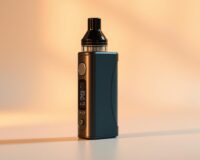
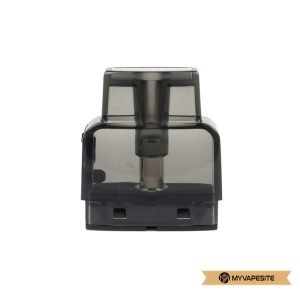
- From the “Bubble-Glas” to the slim design: While markets outside the EU often rely on massive tanks, European manufacturers prefer slim ones, compact designs. This encouraged the rise of pod systems, which are perfectly tailored to the 2ml limit.
- Focus on refill efficiency: Because users need to refill more frequently, became the Top-Fill-Technologie to the standard. Modern vapes now use sliding mechanisms or silicone seals, to make the refilling process as quick and clean as possible.
2. Safety in focus: Child lock and leak protection
The TPD dictates, that e-cigarettes kinder- and tamper-proof and must be protected against leakage of liquids. This has led to a new generation of hardware.
- Childproof closures: Many vaporizers today have one “Press-and-Twist”-Mechanism on the tank or an electronic key lock, to prevent accidental activation by children.
- Anti-leakage innovations: To meet strict EU requirements, engineers have complex ones Labyrinth airflow systems and sealed pod structures developed, which almost completely eliminate the leakage of liquid.
3. The nicotine upper limit and the “Shortfill”-Trend
By limiting the nicotine strength to 20 mg/ml and the bottle size 10 ml the industry had to rethink the design of consumables.
- The birth of short fills: Because 10ml bottles are impractical for frequent vapers, larger ones emerged, Nicotine-free bottles with additional space for “Nic-Shots”.
- Precision bottle tips: The design of the liquid bottles has been standardized, with extremely thin drip tips, which fit exactly into the TPD-compliant filling openings of the devices.
4. Constant power delivery through intelligent chipsets
A technical aspect of the TPD is the requirement for a uniform nicotine delivery. this means, that each pull on the device should deliver the same amount of active ingredient.
- Intelligent chip control: Manufacturers invested heavily in the development of PCBA chipsets. These actively regulate the voltage, so that the vaporization performance remains constant even when the battery level drops. This not only guarantees legal compliance, but also significantly improves the user experience.
Comparison: E-cigarette design (Vor vs. According to TPD)
| Feature | Pre-TPD design | Modern TPD Design (Europa) |
| Tank capacity | 5ml – 10ml (often bulky) | Maximum 2ml (compact) |
| Filling | Open openings | Child safe / Leak-proof |
| Hardware size | Focus on performance/size | Focus on portability/efficiency |
| nicotine abstinence | Fluctuates depending on the battery | Constant thanks to chip regulation |
5. Packaging and visual communication
The TPD also regulates the external appearance of the packaging. 30 % the surface must be covered with health warnings.
- Professionalization of branding: Because there is no more room for playful or child-friendly graphics, the design has become one high -quality, technological aesthetics developed. Today, vapes are marketed more like smartphones or premium gadgets, which has increased social acceptance.
The TPD rules have made vaping in Europe safer and more controlled. This presented a challenge for designers, which, however, leads to a new era of leak-proof, intelligent and handy devices has led. Anyone who buys a TPD-compliant device today, benefits from technological maturity, which may never have been achieved without this regulatory pressure.