The debate about indoor air quality is now more nuanced than ever before. While the health risks for active smokers have been proven by decades of studies, The evaluation of e-cigarette aerosols requires a precise scientific classification. As an actor with over ten years of experience in the industry Myvapesite pursues the goal, the current state of research on “harm reduction” (Damage minimization) presented transparently and taking into account the inherent risks.
The toxicological burden of tobacco combustion
Die U.S. Environmental Protection Agency (EPA) classifies indoor tobacco smoke as a Group A carcinogen. This is primarily due to the incomplete combustion of organic matter. At temperatures of up to 900 °C will be above 7.000 chemical compounds emitted.
A critical one, An often overlooked aspect is the persistence of these substances. Sea World Health Organization (WHO) Passive exposure increases annually 1,2 Millions of premature deaths. Show quantitative measurements, that fine dust particles (PM2.5) Made from tobacco smoke, it can float in the air for hours and become permanently deposited in surfaces as “third-hand smoke”..
E-cigarettes: The PHE report and the current scientific discourse
Often the estimate of Public Health England (PHE) quoted, according to which e-cigarettes, for example 95 % less harmful than tobacco cigarettes. However, it is essential, to interpret this value in the correct context:
- Relative vs. Absolute security: The “95% number” refers to the relative risk compared to smoking, not to absolute harmlessness.
- Criticism and evidence: Scientific committees, including that German Federal Institute for Risk Assessment (BfR) and the WHO, point out, that long-term studies are still pending and e-cigarette aerosols may contain particles such as metals and potentially irritating aldehydes.
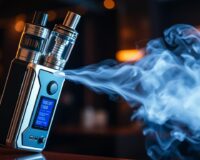
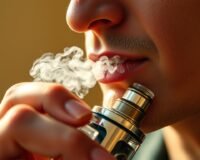
- Aerosoldynamik: In contrast to tobacco smoke, e-cigarette aerosol usually evaporates within 10 bis 15 seconds. Nevertheless, short-term accumulations of ultrafine particles can be measured in poorly ventilated rooms.
Comparative quantitative analysis of emissions
Based on toxicological meta-analyses, the differences in pollutant exposure can be summarized as follows:
| Emissionsquelle | combustion (Plate) | Aerosol (E-cigarette) | Scientific note |
| Fine dust (PM2.5) | Extremely high (>400 µg/m³ pro Zigarette) | Moderately increased with intensive use | Aerosol particles are liquid, not solid |
| Carbon monoxide (CO) | Significantly (Danger to cardiovascular system) | Undetectable | Result of the lack of combustion |
| Carcinogens (z.B. NNN, NNK) | High concentration (Tar residue) | About that 100- reduced up to 1000 times | Depending on liquid quality and temperature |
| Passive Risk | Epidemiologically proven (WHO) | Minor; Be careful with metal emissions | Long-term data on passive exposure are limited |
Ethical responsibility and limitations of use
Despite the potential for harm reduction for active smokers, a clear line must be drawn. Responsible use of e-cigarettes implies strict rules:
- No consumption in the presence of vulnerable groups: Pregnant women, Children and people with previous respiratory illnesses must not be exposed to aerosols.
- No entry for non-smokers: E-cigarettes are designed exclusively as a replacement product for existing smokers.
- quality assurance: Consumers should only use products, which meet the strict guidelines of the EU tobacco product directive (TPD2) are equivalent to, to avoid contamination.
Conclusion: Harm minimization as a pragmatic approach
The e-cigarette is not a “lifestyle accessory” for clean air, but is one technological tool for harm reduction. The scientific evidence suggests so, that switching from combustion products to aerosol systems significantly reduces indoor pollutant levels, but not completely eliminated.
For adult smokers, this change offers a realistic opportunity, to drastically reduce the risk for yourself and those around you, while the ultimate goal should always remain complete abstinence.
References:
- PHE (UK): Landmark Review on E-Cigarettes
- U.S. EPA: Indoor Air Quality Analysis on Secondhand Smoke
- WHO: 8 Facts about Second-hand Smoke Exposure
Medical disclaimer: This article is intended to provide information and does not replace medical advice. Nicotine is a highly addictive substance. Consult certified agencies to help you quit tobacco.